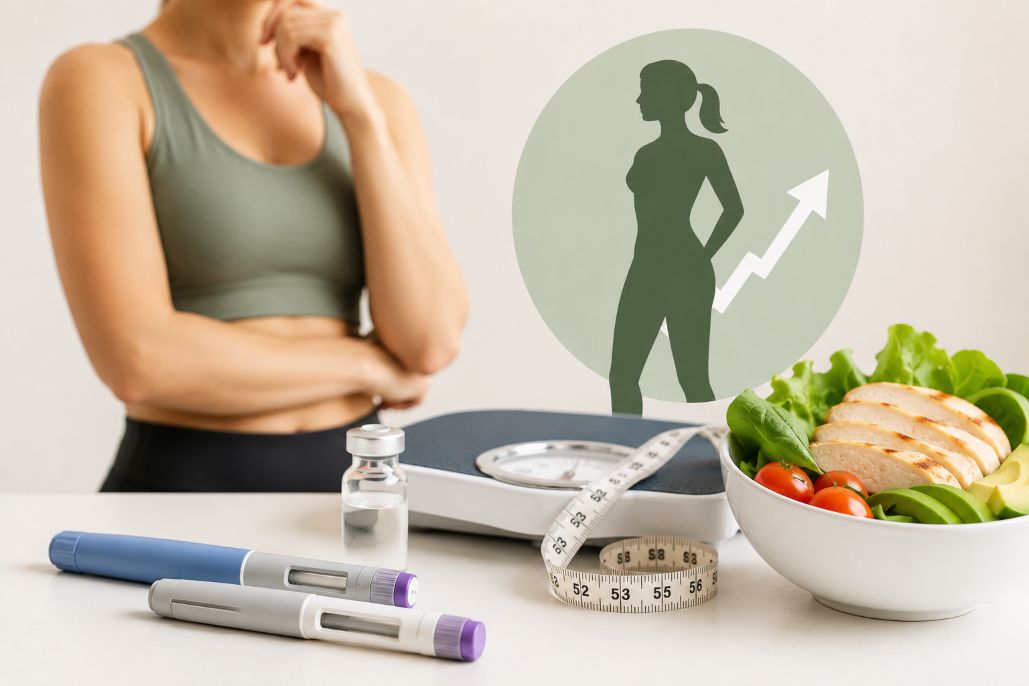

Semaglutide can be an effective tool for weight management, but weight loss doesn’t happen at the same pace for everyone. If the scale is moving slowly or has stopped changing, it does not necessarily mean the treatment has failed. Dosage, treatment duration, consistency, nutrition, activity levels, medical conditions, other medications, and individual response can all influence results.
At Fitfocus MD, we recognize that effective virtual weight loss treatment requires more than focusing on a number on the scale. We take a personalized approach that considers your health, treatment response, lifestyle, and goals while providing convenient care options, including virtual appointments.
How Does Semaglutide Help With Weight Loss?
Semaglutide is a medication in the GLP-1 receptor agonist class. GLP-1 is a hormone involved in appetite regulation, digestion, and blood sugar control. Semaglutide works by activating GLP-1 receptors, which can help reduce hunger and increase feelings of fullness.
For people using semaglutide for weight management, reduced appetite can make it easier to control portions and reduce overall food intake. Some people may notice fewer cravings, feel satisfied with smaller meals, or find it easier to follow healthier eating patterns.
However, GLP-1 weight loss doesn’t look the same for everyone. Two individuals taking semaglutide may experience different rates of weight reduction because their doses, treatment duration, metabolism, lifestyle habits, medical conditions, and responses to the medication can differ.
Weight loss should therefore be evaluated as a longer-term trend rather than judged by a few days or individual weigh-ins.
10 Possible Reasons You Are Not Losing Weight on Semaglutide
Several factors can affect how quickly semaglutide supports weight loss, from dosage and treatment duration to nutrition, activity, consistency, health conditions, and individual response.
1. You May Still Be on a Lower Semaglutide Dose
Semaglutide treatment is generally introduced gradually rather than beginning with a higher dose immediately. This approach can help the body adjust to the medication and may help reduce gastrointestinal side effects.
If you are still using an introductory dose, you may not experience the same degree of appetite suppression or weight reduction as someone who has progressed further in treatment.
There is no universally appropriate semaglutide dose for weight loss. The appropriate dose depends on the specific medication, treatment indication, medical history, tolerability, and clinical response.
We should not increase the dose simply because the scale has not changed quickly. Dose adjustments should always be discussed with the prescribing healthcare professional.
2. You May Not Have Been Taking Semaglutide Long Enough
Weight loss is not always immediate. During the early stages of treatment, the primary objective may include helping the body adjust to the medication while establishing a sustainable treatment routine.
Day-to-day weight measurements can also be misleading. Body weight naturally changes because of fluid levels, digestion, sodium intake, carbohydrate intake, hormonal changes, and other factors.
Rather than focusing on whether your weight changed from one morning to the next, we recommend looking at longer-term weight trends.
If you have only recently started semaglutide, limited early weight loss does not automatically indicate that the medication will be ineffective for you.
3. Your Calorie Intake May Still Be Higher Than You Realize
Semaglutide can reduce appetite, but it does not eliminate the importance of nutrition. It is still possible to consume more calories than intended, particularly through snacks, beverages, large portions, sauces, desserts, and calorie-dense foods.
Liquid calories can be especially easy to overlook. Sweetened beverages, specialty coffees, juices, and other drinks may contribute substantial calories without creating the same feeling of fullness as a balanced meal.
We can support weight management by emphasizing nutrient-dense foods such as lean protein, vegetables, fruits, whole grains, and appropriate sources of healthy fats.
At the same time, extreme calorie restriction is generally not a sustainable strategy. The objective is to establish eating habits that support adequate nutrition while creating a reasonable calorie deficit when appropriate.
4. You May Not Be Getting Enough Physical Activity
Medication can support weight management, but regular physical activity remains an important component of a comprehensive plan.
We do not need to assume that effective exercise requires an intense daily workout. Walking, resistance training, cycling, swimming, mobility work, and other sustainable activities can contribute to overall energy expenditure and physical health.
Resistance training can also be valuable because maintaining muscle mass is an important consideration during weight loss.
The appropriate activity level depends on your fitness, health, age, physical limitations, and other individual factors. Exercise should complement medical treatment rather than be viewed as a replacement for appropriate clinical care.
5. You May Be Experiencing Temporary Weight Fluctuations
The number displayed on a scale represents more than body fat. Temporary changes in body water, digestion, sodium intake, carbohydrate consumption, bowel movements, and hormonal fluctuations can cause noticeable changes in weight.
For some women, the menstrual cycle can also contribute to temporary changes in fluid retention and scale weight.
This means that a short-term increase or plateau does not necessarily mean you have gained body fat or that semaglutide has stopped working.
We recommend considering the overall trend over several weeks rather than reacting to isolated measurements. Consistent tracking under similar conditions can provide a much clearer picture of progress.
6. Your Treatment May Not Be Consistent
Consistency is an important part of medication-based weight management. Missing prescribed doses, taking medication at inconsistent intervals, or interrupting treatment without professional guidance may affect your overall response.
If you use a semaglutide injection, follow the schedule and administration instructions provided by your healthcare professional.
If you have missed a dose or experienced difficulty maintaining your treatment schedule, we recommend discussing the situation with your provider rather than attempting to compensate by changing the amount yourself.
You should not increase, decrease, restart, or discontinue semaglutide without appropriate medical guidance.
7. Another Medication or Health Condition May Be Affecting Weight
Sometimes limited weight loss has little to do with semaglutide itself. Certain health conditions and medications can influence appetite, metabolism, energy levels, fluid balance, or body weight.
Examples can include thyroid disorders, hormonal changes, sleep-related problems, and medications that are associated with weight gain.
If your progress remains limited despite consistent treatment and appropriate lifestyle habits, a healthcare professional can review your medical history and current medications to determine whether another factor may be contributing.
A broader medical assessment can be particularly valuable when weight changes are accompanied by other symptoms or when your response differs significantly from what would normally be expected.
8. Your Expectations for Weight Loss May Be Too High
Social media can make weight loss appear faster and more predictable than it actually is. Online success stories often highlight dramatic results without showing the complete treatment timeline, starting weight, lifestyle changes, medical history, or other factors involved.
Healthy weight management does not follow one universal timeline.
A realistic assessment should consider changes over time rather than comparing your progress with another person’s results. Improvements may also extend beyond the scale, including better appetite control, healthier eating patterns, improved mobility, increased activity, and better management of certain health markers.
Sustainable progress is generally more useful than pursuing rapid results that may be difficult to maintain.
9. Semaglutide May Not Be the Right Option for Everyone
Although semaglutide can provide meaningful benefits for some individuals, no medication produces identical results for every patient.
Some people may experience a limited response, while others may have difficulty tolerating treatment because of side effects. In other cases, a patient’s medical circumstances may change during treatment and require a reassessment.
This does not mean you should stop treatment or switch medications independently.
A healthcare professional can review your response and determine whether your current prescription weight loss medication remains appropriate or whether another strategy should be considered.
The goal should be to identify an approach that is medically appropriate, tolerable, and realistic for your individual circumstances.
10. You May Need a More Personalized Weight Loss Strategy
Medication is only one part of effective weight management. Nutrition, physical activity, sleep, stress, behavioral patterns, medical conditions, medication adherence, and ongoing monitoring can all influence outcomes.
A personalized weight loss treatment plan allows these factors to be considered together rather than treating medication as an isolated solution.
At Fitfocus MD, we focus on understanding individual barriers to progress and creating a treatment strategy based on each patient’s circumstances. Regular monitoring can also help determine whether adjustments are appropriate as treatment progresses.
Interesting Read: Why Am I Not Losing Weight on GLP-1 Medication?
What Should I Do If Semaglutide is Not Working for Me?
If your weight loss has slowed or stopped while taking semaglutide, the first step is not necessarily to increase your medication. Instead, we recommend reviewing several aspects of your treatment.
Start by looking at your long-term weight trend rather than individual measurements. Then consider whether you have been following the prescribed medication schedule consistently.
It can also be helpful to review:
- Your current semaglutide dose
- How long you have been receiving treatment
- Eating patterns and portion sizes
- Snacks and calorie-containing beverages
- Physical activity
- Sleep habits
- Other medications
- Relevant health conditions
- Medication side effects and tolerability
A healthcare provider can evaluate these factors and determine whether your current treatment remains appropriate.
Do not increase, decrease, or stop semaglutide on your own. Any medication change should be made with appropriate medical supervision.
When Should You Talk to a Weight Loss Doctor?
Professional guidance can be especially valuable when you have experienced persistent lack of weight loss despite consistent treatment, are unsure whether your current dose is appropriate, or are experiencing side effects that make treatment difficult to continue.
A medical evaluation can help distinguish between a temporary plateau and a broader treatment concern.
For patients looking for convenient care, an Online Weight Loss Doctor in Frisco can provide an option for discussing treatment progress without requiring every appointment to take place in person.
During an evaluation, a provider may review your treatment history, current medications, health factors, lifestyle habits, progress, and goals before determining the most appropriate next steps.
Can Virtual Weight Loss Treatment Help With Semaglutide?
Virtual care can make medical weight management more convenient for eligible patients. Depending on your location and clinical circumstances, virtual appointments may allow you to discuss your weight-loss progress, medication response, treatment concerns, and ongoing goals with a qualified healthcare professional.
Virtual weight loss treatment may include medical evaluation, progress monitoring, medication assessment, lifestyle guidance, and ongoing provider support.
A virtual weight-loss medication program should still involve appropriate medical assessment. Online treatment does not mean medication is prescribed automatically. Eligibility, medical history, current medications, treatment goals, and individual circumstances should all be considered before a provider determines whether a medication is appropriate.
Virtual care can be particularly useful for patients who value convenience while still wanting professional oversight throughout their weight-management journey.
Why Choose Fitfocus MD for Medical Weight Loss?
At Fitfocus MD, we take a personalized approach to medical weight management. Instead of assuming that one medication, dose, or strategy will work identically for everyone, we consider individual factors that may influence treatment response.
Our approach can include:
- Personalized weight-management plans
- Convenient virtual care
- Medical evaluation and ongoing monitoring
- Individualized medication guidance when appropriate
- Support focused on sustainable progress
- Ongoing assessment of treatment response
- Lifestyle and behavioral considerations
- Convenient access to an online weight loss clinic
For patients searching for a weight loss clinic in Frisco, convenient medical support can make it easier to stay engaged with treatment and address concerns when progress changes.
The objective is not simply to provide medication. Effective care should focus on understanding your individual circumstances and developing a medically appropriate strategy that can be monitored and adjusted when necessary.
Take the Next Step With Fitfocus MD
Not losing weight as quickly as expected on semaglutide does not automatically mean that treatment has failed. A slower response, temporary plateau, lower dose, inconsistent treatment, lifestyle factors, medical conditions, and individual differences can all influence progress.
Rather than changing your medication independently, we recommend having your treatment reviewed by a qualified healthcare professional. A personalized assessment can help identify potential barriers and determine whether your current approach remains appropriate.
Fitfocus MD provides convenient, personalized medical weight management designed around individual needs and treatment goals.
Schedule a consultation with Fitfocus MD to discuss your weight-loss goals and treatment options.
Frequently Asked Questions About Semaglutide and Weight Loss
How long does it take to lose weight on semaglutide?
The timeline varies from person to person. Results can be influenced by the dose, treatment duration, nutrition, physical activity, medical history, adherence, and individual response. We evaluate progress over time rather than relying on isolated weigh-ins.
What is the best semaglutide dose for weight loss?
There is no single dose that is best for everyone. Semaglutide is generally introduced gradually, and the appropriate dose depends on the medication, treatment goals, tolerability, medical history, and clinical response. Dosing should be determined by a qualified healthcare professional.
Can you stop losing weight while taking semaglutide?
Yes. Weight-loss plateaus can occur during treatment. As body weight changes, energy needs may also change, and temporary fluctuations can obscure longer-term progress. A provider can evaluate your treatment, lifestyle factors, and medical circumstances if a plateau persists.
Does semaglutide work for everyone?
No medication works in exactly the same way for every person. Individual responses can differ because of genetics, metabolism, medical conditions, treatment adherence, lifestyle factors, dose, and other variables. Limited response may warrant a professional review of the treatment plan.
Can I take semaglutide with other weight loss treatments?
Combining weight-loss medications or treatments should not be done independently. Some combinations may be inappropriate or require specific medical considerations. We recommend discussing all medications, supplements, and weight-loss treatments with your healthcare provider before combining them.
Can I get semaglutide through an online weight loss clinic?
Online medical weight management may be available for eligible patients depending on location, medical history, treatment needs, and provider assessment. A qualified healthcare professional should determine whether semaglutide is appropriate before prescribing or recommending treatment.