Thinning hair and progressive hair loss can affect appearance, confidence, and the way we feel about our overall image. Because hair loss can develop for many different reasons, choosing an appropriate treatment requires more than simply selecting the most popular option. Two approaches that are often compared are PRP hair restoration vs. hair transplant.
Although both treatments are designed to address hair loss, they work in very different ways. PRP hair restoration focuses on supporting existing hair follicles, while a hair transplant surgically moves healthy follicles from a donor area into areas affected by hair loss. Understanding these differences can help us make more informed decisions about available hair restoration options.
At Fit Focus MD, we take an individualized approach to hair restoration by considering the pattern and severity of hair loss, follicle health, treatment goals, and other personal factors before discussing appropriate options. For patients considering PRP hair therapy in Frisco, TX, this personalized evaluation helps determine whether PRP is a suitable approach for their hair restoration goals.
What is PRP Hair Restoration?
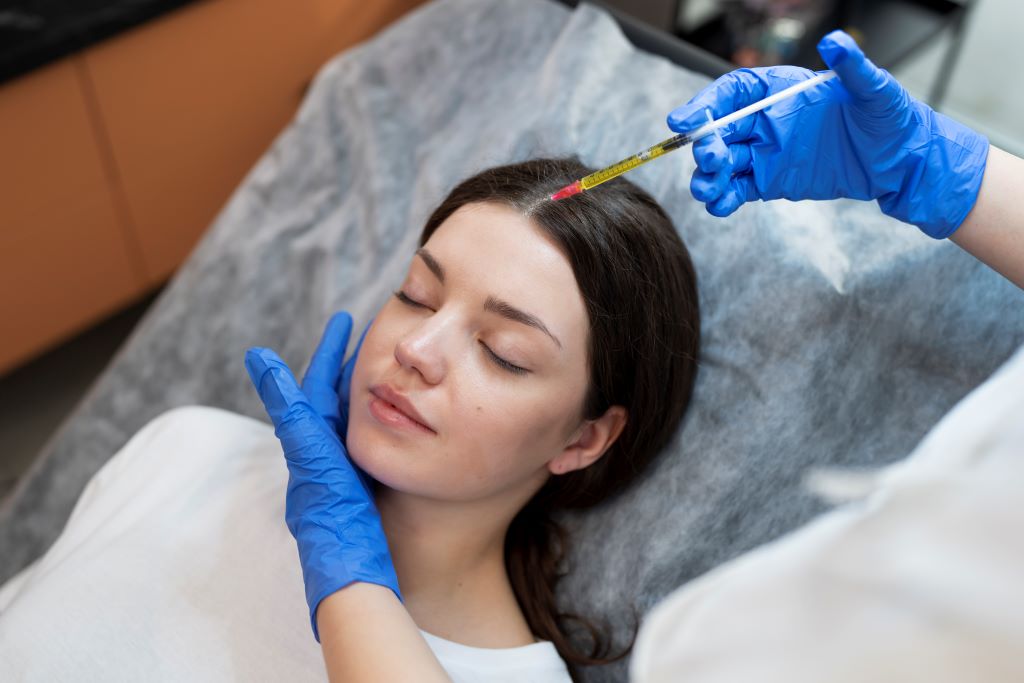
PRP hair restoration uses platelet-rich plasma prepared from the patient’s own blood. A small blood sample is collected and processed to separate the platelet-rich portion from other blood components. The prepared PRP is then applied or injected into targeted areas of the scalp.
Platelets contain growth factors and other substances involved in the body’s natural healing processes. When PRP is used for hair loss, the goal is to support the environment around existing follicles and potentially encourage healthier hair growth.
A PRP hair treatment may be considered for people experiencing certain forms of early or moderate thinning, particularly when viable follicles remain. It is not designed to transplant new follicles into completely bald areas. Instead, PRP for hair loss focuses on supporting follicles that are already present.
Depending on the individual’s hair loss and treatment goals, PRP may be recommended as a PRP treatment for hair thinning, a PRP hair regrowth option, or as part of a personalized PRP hair restoration treatment plan.
How PRP Hair Treatment Works
A typical PRP hair treatment involves several steps:
- Blood collection: We collect a small sample of the patient’s blood.
- Platelet separation: The sample is processed to separate platelet-rich plasma from other blood components.
- PRP preparation: The concentrated plasma is prepared for treatment.
- Scalp treatment: PRP is injected into selected areas of the scalp where thinning is present.
- Follow-up: Multiple sessions may be recommended depending on the treatment plan and individual response.
Understanding how PRP hair restoration works is important because PRP does not immediately produce a full head of new hair. Hair grows through cycles, so changes generally occur gradually. We also consider the underlying reason for hair loss before determining whether PRP is appropriate.
What is PRP Microneedling?
PRP microneedling combines controlled microneedling with PRP as part of a hair restoration approach. Microneedling creates very small, controlled micro-injuries in the scalp. PRP may then be applied to the treated area or incorporated into the overall procedure.
Injectable PRP and PRP microneedling are not identical treatments. The appropriate technique depends on the patient’s scalp condition, hair-loss pattern, goals, and the provider’s treatment plan.
What is a Hair Transplant?
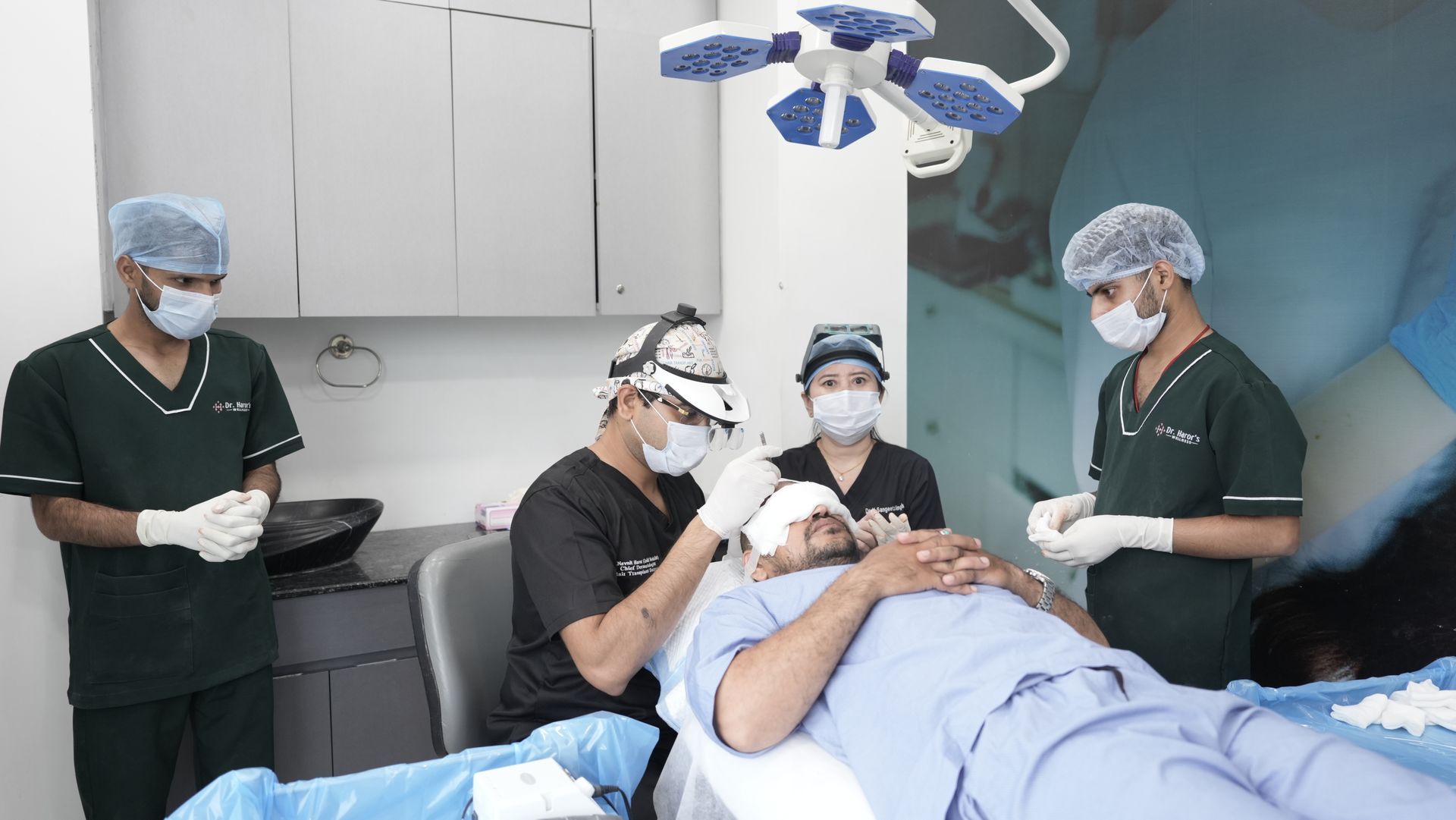
A hair transplant is a surgical hair restoration procedure that moves actual hair follicles from one part of the body, usually a donor area of the scalp, to areas experiencing significant thinning or baldness.
Unlike PRP, a hair transplant does not primarily aim to strengthen existing follicles. Instead, it introduces follicles into areas where hair density has been reduced. Common transplantation methods include Follicular Unit Extraction (FUE) and Follicular Unit Transplantation (FUT).
The success and suitability of transplantation depend on factors such as donor hair availability, the pattern of hair loss, scalp characteristics, age, and the expected progression of hair loss.
How Does a Hair Transplant Procedure Work?
A hair transplant generally involves several stages:
- Consultation and hair-loss assessment: We evaluate the pattern and extent of hair loss.
- Donor-area evaluation: The available density and quality of donor follicles are assessed.
- Follicle harvesting: Healthy follicles are removed using the selected surgical technique.
- Graft preparation: Harvested follicles are prepared for implantation.
- Implantation: Grafts are placed into carefully planned areas of thinning or baldness.
- Recovery and growth: The scalp heals while transplanted follicles progress through their natural growth cycle.
The visible results of a transplant develop gradually. Newly transplanted follicles need time to establish themselves and produce growing hair.
PRP Hair Restoration vs Hair Transplant: Key Differences
PRP hair restoration supports existing follicles, while a hair transplant moves healthy follicles to thinning areas. Understanding the differences can help you choose the right hair loss treatment.
| Factor | PRP Hair Restoration | Hair Transplant |
| Treatment type | Non-surgical | Surgical |
| Main purpose | Supports existing follicles | Adds follicles to thinning or bald areas |
| Best suited for | Certain types of hair thinning | Pattern hair loss with suitable donor hair |
| Downtime | Generally minimal | Requires recovery |
| Hair follicles moved | No | Yes |
| Treatment sessions | Usually multiple | Typically a planned surgical procedure |
| Results | Gradual | Gradual growth of transplanted follicles |
| Maintenance | May require ongoing treatments | Transplanted hair is intended to provide long-term growth |
The biggest distinction is that PRP supports existing follicles, whereas a hair transplant moves follicles from a donor area to another location. Neither treatment is automatically better for every individual.
PRP Hair Restoration Benefits
There are several potential PRP hair restoration benefits to consider when evaluating treatment options.
First, PRP is a non-surgical approach, making it different from procedures that require follicle harvesting and implantation. It also uses components obtained from the patient’s own blood.
PRP generally involves less downtime than surgical transplantation, which may make it an option for individuals who prefer a less invasive treatment approach. It may also be considered when hair follicles are weakened or thinning but remain viable.
Other potential advantages include:
- Supporting weakened or thinning hair
- Addressing certain forms of early-stage hair loss
- Providing a non-surgical treatment option
- Potentially combining with other hair restoration approaches
- Allowing treatment to be adjusted according to individual needs
- Avoiding surgical movement of hair follicles
PRP is not appropriate for every type or stage of hair loss. A proper evaluation helps determine whether existing follicles are suitable for treatment.
Hair Transplant Benefits
A major advantage of a hair transplant is that it uses actual hair follicles from a donor area. Rather than attempting to stimulate follicles that may no longer produce meaningful hair, transplantation introduces healthy follicles into selected areas.
Potential hair transplant benefits include:
- Addressing noticeable bald or significantly thinning areas
- Using actual donor hair follicles
- Creating a natural-looking hairline when properly planned
- Providing a long-term surgical hair restoration approach
- Increasing hair density in appropriately selected areas
- Working well for some individuals with sufficient donor hair
A transplant is still a surgical procedure, so recovery, donor availability, surgical planning, and realistic expectations are important considerations.
Hair Transplant vs PRP: Which Treatment Is Right for You?
There is no universal answer when comparing hair transplant vs PRP. The right option depends on the cause and progression of hair loss, the condition of existing follicles, available donor hair, and the individual’s goals.
When PRP May Be Considered
PRP may be considered when:
- Hair loss is in an earlier stage
- Existing follicles remain viable
- Hair thinning is relatively diffuse
- We want to explore a non-surgical approach
- Supporting existing hair is the primary objective
PRP may be particularly relevant when there is still existing hair that could potentially benefit from follicle-supportive treatment.
When a Hair Transplant May Be Considered
A hair transplant may be considered when:
- Pattern hair loss has progressed
- Noticeable bald areas are present
- There is adequate donor hair
- The individual wants surgical restoration
- Existing follicles cannot provide the desired density on their own
A transplant requires careful planning because the donor supply is limited. Preserving donor hair for potential future needs is therefore an important part of treatment planning.
Can PRP and Hair Transplants Be Combined?
In some cases, PRP may be incorporated into a broader hair restoration plan that includes transplantation. The purpose and timing of combination treatment depend on the individual’s needs and the provider’s recommendations.
Because hair loss can continue after transplantation, some patients may also need an ongoing strategy for maintaining surrounding native hair. We should evaluate the complete hair-loss pattern rather than focusing only on one treatment.
PRP vs. PRF for Hair Restoration
PRP and PRF are related regenerative approaches, but they are prepared differently. Platelet-rich plasma is processed to concentrate platelets in plasma, while platelet-rich fibrin uses a different preparation method that produces a fibrin matrix containing platelets and other components.
Patients may encounter PRF hair restoration in Frisco while researching alternatives to PRP. However, one approach should not automatically be considered superior to the other.
Treatment selection should be based on the patient’s hair-loss characteristics, scalp condition, goals, and the provider’s clinical assessment. A consultation can help determine which approach, if any, is appropriate.
What to Consider Before Choosing a Hair Loss Treatment
Before choosing a treatment, we should consider several factors rather than focusing only on the procedure itself.
1. Cause and Type of Hair Loss
Different forms of hair loss can require different approaches. Pattern hair loss, diffuse thinning, temporary shedding, and other conditions should not automatically be treated in the same way.
2. Severity of Thinning
The amount of existing hair and the extent of follicle loss can influence whether a treatment focused on existing follicles is appropriate or whether transplantation should be considered.
3. Donor Hair Availability
For transplantation, donor hair is essential. Individuals with limited donor density may have fewer surgical restoration options.
4. Treatment Goals
Some patients primarily want to support thinning hair without surgery, while others want to restore density in clearly defined bald areas.
5. Expected Timeline
Hair restoration is rarely an immediate process. PRP and transplantation both require patience because hair grows according to natural biological cycles.
6. Recovery and Downtime
PRP generally involves less downtime than a surgical transplant. Individuals should consider how much recovery time they can accommodate.
7. Budget and Maintenance
The overall cost of treatment can depend on the number of sessions, surgical requirements, maintenance needs, and the chosen approach.
8. Combination Treatment
In certain situations, more than one strategy may be discussed. A personalized evaluation helps determine whether combining treatments makes sense.
Other Hair Restoration Options to Consider
PRP and transplantation are not the only approaches available. Depending on the cause and severity of hair loss, a comprehensive plan may include other hair restoration options.
Potential approaches may include:
- Medical hair-loss treatments
- PRP
- PRF
- Hair transplantation
- Microneedling
- Lifestyle and nutritional considerations
- Evaluation for possible underlying causes
- Ongoing strategies for maintaining existing hair
A hair loss treatment plan should focus on the individual’s specific situation rather than treating every case of thinning hair in exactly the same way. Similarly, a hair regrowth treatment should have realistic goals based on the condition of the existing follicles.
Personalized Hair Restoration at Fit Focus MD
Hair loss does not affect everyone in the same way, so treatment should not follow a one-size-fits-all approach. At Fit Focus MD, we evaluate the cause and severity of hair loss, existing follicle health, donor hair availability, treatment preferences, and long-term goals when discussing personalized hair restoration options. As a trusted PRP clinic in Frisco, our team can help patients understand whether PRP may be an appropriate option for their specific hair-loss concerns.
Whether we are evaluating PRP, PRF, hair transplantation, or another hair loss treatment, understanding the condition of the scalp and remaining follicles is an important part of developing an appropriate plan. Working with a qualified PRP dermatologist can help ensure that treatment recommendations are based on an individual’s hair-loss pattern, scalp health, and desired results.
Explore Your Hair Restoration Options With Fit Focus MD
If thinning or hair loss is affecting your appearance or confidence, we encourage you to schedule a consultation with Fit Focus MD. Our PRP specialist can evaluate your hair and scalp, discuss your concerns, and help determine which hair restoration treatment may best align with your individual needs and goals.
Frequently Asked Questions About PRP Hair Restoration vs Hair Transplant
Is PRP better than a hair transplant?
Neither treatment is universally better. PRP supports existing follicles, while a hair transplant moves follicles from a donor area. The appropriate option depends on the individual’s hair-loss pattern, follicle health, donor availability, and goals.
What is the difference between PRP hair treatment and a hair transplant?
PRP is a non-surgical treatment that uses platelet-rich plasma to support existing hair follicles. A hair transplant is a surgical procedure that moves healthy follicles from a donor area into areas affected by hair loss.
Can PRP regrow hair on a bald scalp?
PRP is generally intended to support existing follicles rather than create new follicles in completely bald areas. Its potential benefit depends on whether viable follicles remain in the treated area.
How long does PRP hair restoration take to show results?
Hair growth occurs gradually, so PRP results are not immediate. The timeline can vary between individuals depending on the cause of hair loss, follicle condition, treatment plan, and natural hair-growth cycle.
How many PRP treatments are needed for hair loss?
The number of treatments varies according to individual needs and the provider’s treatment plan. Multiple sessions may be recommended, followed by evaluation of the patient’s response.
Is a hair transplant permanent?
Transplanted follicles are intended to provide long-term hair growth, but overall hair loss can continue in non-transplanted areas. Long-term planning is therefore important.
Can PRP be used after a hair transplant?
PRP may sometimes be incorporated into a broader post-transplant hair restoration strategy. Whether it is appropriate and when it should be performed should be determined by the treating professional.
Is PRP hair treatment painful?
Some patients may experience temporary discomfort during scalp injections. The level of discomfort varies, and providers can discuss appropriate measures to improve treatment comfort.
Who is a good candidate for PRP for hair loss?
Potential candidates may include individuals with certain forms of thinning who still have viable hair follicles. An evaluation is necessary to determine whether PRP is appropriate for a specific type and stage of hair loss.
What is the difference between PRP and PRF for hair restoration?
PRP and PRF use different preparation methods and have different characteristics. Both may be considered in hair restoration, but treatment selection should be based on individual needs and professional assessment.