
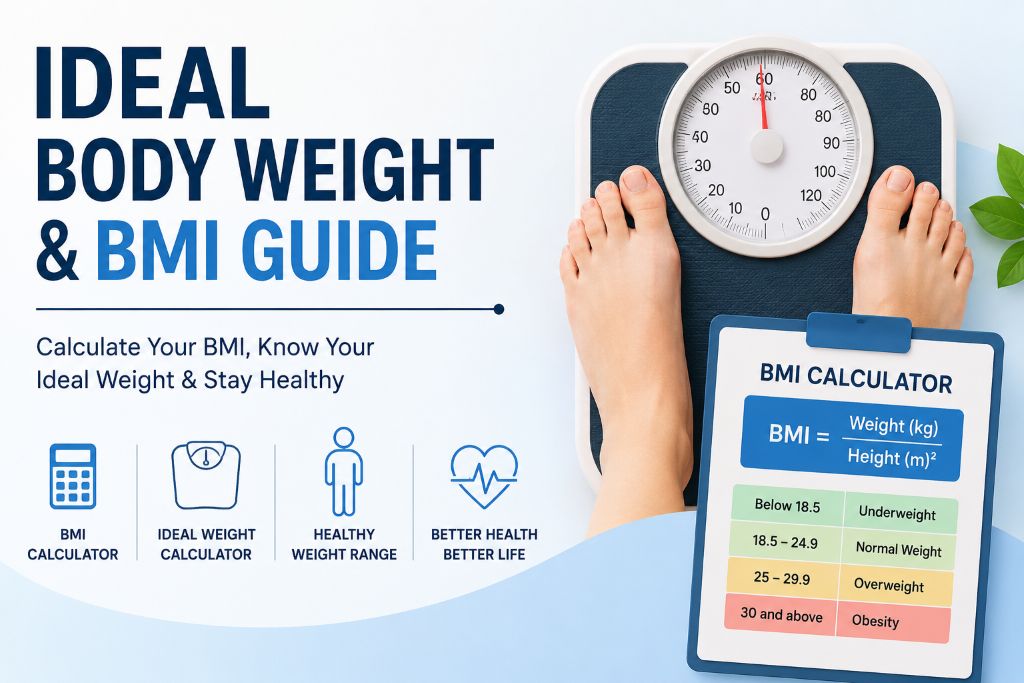
Understanding your ideal body weight is essential for achieving long-term health, confidence, and physical performance. It goes beyond appearance, it reflects how well your body functions internally and how effectively it supports your lifestyle. Maintaining a healthy weight reduces the risk of chronic diseases, improves energy levels, and enhances overall quality of life.
Today, digital tools like an ideal weight calculator and BMI calculator ideal weight solutions make it easier than ever to assess where you stand. These tools provide quick insights, helping individuals make informed decisions about their health journey.
What Is Ideal Body Weight?
Ideal body weight refers to the weight range that is considered optimal for an individual based on several physiological factors. It is not a fixed number but rather a range where the body performs efficiently with minimal health risks.
Ideal vs Healthy Weight
- Ideal weight is a theoretical target based on formulas.
- Healthy weight considers real-world factors such as fitness level, muscle mass, and lifestyle.
Factors That Influence Ideal Body Weight
- Age: Metabolism slows with age, affecting weight balance.
- Gender: Men and women differ in muscle and fat composition.
- Height: Taller individuals naturally weigh more.
- Body Composition: Muscle weighs more than fat, influencing total weight.
A personalized approach always provides better accuracy than generalized numbers.
What Is BMI (Body Mass Index)?
BMI (Body Mass Index) is a widely used metric that evaluates whether a person’s weight is appropriate for their height. It provides a quick snapshot of body weight status.
BMI is popular because:
- It is simple and fast.
- Requires only height and weight
- Helps categorize individuals into health ranges
Modern tools like the BMI calculator for women and men are designed to offer gender-specific insights for better interpretation.
BMI Formula to Calculate Body Weight
The BMI formula is a simple mathematical approach that helps determine whether your body weight is proportionate to your height. It serves as a foundational method for assessing weight categories and health risks.
The standard formula used worldwide is:
BMI=weight (kg)height (m)2BMI = \frac{\text{weight (kg)}}{\text{height (m)}^2}BMI=height (m)2weight (kg)
How It Works
BMI compares your weight relative to your height. A higher BMI indicates higher body fat in most cases.
Example Calculation
If a person weighs 70 kg and is 1.75 meters tall:
- Height squared = 1.75 × 1.75 = 3.06
- BMI = 70 / 3.06 = 22.87
This falls within the normal weight range, indicating a balanced body weight.
BMI Categories and What They Mean
BMI categories provide a clear classification system that helps individuals quickly understand their weight status and associated health risks, making it easier to take corrective or preventive actions.
| BMI Range | Category | Health Interpretation |
| Below 18.5 | Underweight | Risk of nutritional deficiency |
| 18.5 – 24.9 | Normal Weight | Healthy and optimal range |
| 25 – 29.9 | Overweight | Increased health risk |
| 30 and above | Obesity | High risk of chronic diseases |
This classification helps individuals understand where they stand and what adjustments may be needed.
How to Calculate Ideal Body Weight Using BMI
Using BMI to estimate ideal body weight offers a structured and reliable approach that simplifies complex health calculations into easy, actionable steps anyone can follow.
We can determine a realistic weight range using BMI with a structured approach:
Step-by-Step Guide
- Measure your height and weight accurately.
- Apply the BMI formula or use a digital calculator.
- Compare your result with BMI categories.
- Identify the weight range that falls within 18.5 – 24.9.
Why BMI Helps
BMI helps estimate your ideal weight range, not just a single number. It provides a practical framework to aim for sustainable health goals.
Ideal Weight Calculator for Men and Women
Gender-specific calculations enhance accuracy by considering biological differences, ensuring that both men and women receive more personalized and realistic ideal weight ranges.
An ideal weight calculator male and female differ due to physiological variations.
Key Differences
- Men: Typically have higher muscle mass, leading to higher ideal weight ranges
- Women: Naturally have higher body fat percentages, affecting calculations
Gender-specific tools deliver more accurate results by accounting for these differences.
Interesting Read: How Ideal Weight Calculator for Female Helps in Weight Loss Planning
BMI Calculator for Women vs Men – Key Differences
Understanding the differences between men and women in BMI interpretation helps improve accuracy and ensures better health decisions based on individual body composition and hormonal factors.
1. Body Composition
Women generally carry more body fat, while men have more lean muscle.
2. Hormonal Factors
Hormones like estrogen and testosterone influence fat storage and metabolism.
3. Fat Distribution
- Women: Hips and thighs
- Men: Abdominal area
These differences explain why the BMI calculator for men and women provides slightly varied interpretations.
Limitations of BMI in Measuring Ideal Weight
While BMI is a valuable screening tool, it is important to recognize its limitations to avoid misinterpretation and ensure a more comprehensive assessment of health.
While BMI is useful, it has limitations:
- Does not measure muscle mass
- Ignores bone density
- Does not reflect fat distribution
Example
An athlete with high muscle mass may have a high BMI but low body fat, leading to misleading classification.
Other Methods to Calculate Ideal Weight
Combining BMI with other measurement methods provides a more complete understanding of body composition and overall health, improving accuracy in weight assessment.
1. Waist-to-Hip Ratio
Measures fat distribution and cardiovascular risk.
2. Body Fat Percentage
Provides a more precise breakdown of fat vs lean mass.
3. Basal Metabolic Rate (BMR)
Estimates how many calories your body needs at rest.
4. Comparison with BMI
BMI is a starting point, but combining it with these methods gives a complete health picture.
Tips to Maintain Your Ideal Body Weight
Maintaining your ideal body weight requires consistent effort, smart lifestyle choices, and a commitment to long-term habits that support both physical and mental well-being.
Achieving your ideal weight requires consistent habits:
- Balanced Diet: Focus on whole foods, proteins, and fiber
- Regular Exercise: Combine strength training and cardio
- Hydration: Drink adequate water daily
- Quality Sleep: Supports metabolism and recovery
- Consistency: Small daily actions create long-term results
For those seeking professional guidance, a virtual weight loss clinic can provide structured plans and expert support.
When Should You Use an Ideal Weight Calculator?
Using an ideal weight calculator at the right time helps individuals stay proactive about their health, set realistic goals, and track progress effectively over time.
Using an ideal weight calculator is beneficial in multiple scenarios:
- Setting fitness goals
- Planning weight loss or gain
- Monitoring health progress
- Preventive health tracking
Individuals exploring medical guidance may consider consulting an online doctor for weight loss for tailored recommendations.
Conclusion
Understanding and maintaining your ideal body weight is a powerful step toward long-term wellness. By using tools like a BMI calculator, an ideal weight calculator, and a body mass index calculator, we can assess, monitor, and optimize our health with clarity and confidence.
Take control of your health today with Fit Focus. Start by using a reliable calculator, track your progress consistently, and follow a structured plan that aligns with your goals. If you are ready to transform your lifestyle, connect with experts, build sustainable habits, and achieve lasting results, your journey starts now.
FAQs
1. What is the ideal body weight for my height?
Ideal body weight depends on your height, gender, and body composition. Using BMI, a healthy range falls between 18.5 and 24.9. This range helps determine a suitable weight that supports overall health and reduces risk factors.
2. Is BMI accurate for men and women?
BMI provides a general guideline for both men and women, but it does not account for muscle mass or fat distribution. While useful, results may vary slightly due to physiological differences between genders.
3. Which is better: BMI or the ideal weight calculator?
BMI offers a quick range-based assessment, while an ideal weight calculator provides a more refined estimate. Using both together gives a clearer and more practical understanding of your healthy weight range.
4. How can I calculate my BMI at home?
You can calculate BMI by dividing your weight in kilograms by your height in meters squared. Alternatively, use an online calculator for quick and accurate results without manual calculations.
5. What is a healthy BMI range?
A healthy BMI range is between 18.5 and 24.9. This range indicates that your weight is proportionate to your height and is associated with lower risks of chronic health conditions.
6. Can BMI be wrong for muscular people?
Yes, BMI can misclassify muscular individuals as overweight because it does not distinguish between muscle and fat. Athletes often have higher BMI values despite having low body fat and excellent health.